Biblical and Theological Resources
A Resource from Dr. Gary Manning
Spring 2010
The following table describes a number of types of resources that you should not use as research for college papers. Better resources are described on the following pages.
| Unacceptable resource | Reason that it is unacceptable |
| Unpublished internet articles | Most unpublished internet articles are not acceptable as resources for a college paper. However, well-chosen internet resources may supplement print resources (see comments below on internet resources). |
| Sermons | Sermons are great sources of inspiration; but one of the goals of a college Bible class is to get you to the sources that good preachers use. |
| Class notes | A research paper is supposed to expose you to ideas beyond what you learn in class. If you like an idea that you heard in class, keep looking until you find something in print that agrees or disagrees with the class notes. |
| Popular magazine articles (such as Time, Newsweek, Christianity Today) | Such articles must appeal to a popular audience and so do not usually deal with their topic in great depth, or do not deal with opposing ideas. |
| Study Bibles | The point of writing a paper is to do high-quality research. A study bible cannot reach the level of a commentary. |
| Any commentary with the whole Bible in one volume – Bible Knowledge Commentary, for example. | Single-volume commentaries do not have the space to deal with the various options for interpretation. They lack the depth needed for college papers or sermon preparation. |
| Old commentaries (anything before the 1970s) | There are exceptions, since there are some classic commentaries from earlier centuries. But such older commentaries should always be balanced with newer commentaries, since sometimes mistakes from the past are corrected. |
| Most online commentaries | Most online commentaries are there because their copyright has expired and so are too old. See above. |
Matthew Henry Commentary | This commentary is almost 400 years old. The author did not have any access to many recent and important discoveries and scholarly discussions. Use a newer commentary. |
| Any commentary with one author for the whole series (MacArthur Commentary series, for example) | Those who specialize in particular books of the Bible write the best commentaries. A single commentary author is not able to master every book of the Bible. |
| Devotional commentaries (such as those by Max Lucado) | Such commentaries do not wrestle with the complexities of interpretation needed for a college level class (or for serious sermon preparation!) |
| Any Bible dictionary with unsigned articles (Nelson’s, New Unger’s, Vine’s) | Dictionaries with signed articles are almost always better. Use Bible references such as the Anchor Bible Dictionary, International Standard Bible Encyclopedia, or other specialized dictionaries with signed articles. |
| Non-specialized dictionaries (such as Webster’s) | Use specialized theological or bible dictionaries to find the more precise meaning of theological or scholarly terms. |
| Non-specialized encyclopedias (such as Encyclopedia Britannica) | Specialized Bible encyclopedias are more likely to have correct, precise information. |
Internet Resources
§ The majority of reputable modern biblical references are not available on the internet. This means that internet research should be a supplement, and your primary research should be in print commentaries and other print references.
§ Develop the ability to detect pseudo-scholarship, fringe scholarship, and nonsense parading as scholarship. You can find a website that promotes any idea you want, but that does not make the idea valid.
§ Only use websites with known authors who are experts in the field (i.e., an author or professor, usually with a Ph.D. in the field). Online encyclopedias such as Wikipedia are good for a quick exposure to a topic, but are open-source (anyone can contribute) and are therefore unreliable.
§ Blogs can be valuable – but use blogs written by experts. Biblioblogs (http://biblioblogtop50.wordpress.com/biblioblogs/) maintains a list of Bible-related blogs and lists the credentials of the blog authors.
§ Make sure you learn the appropriate MLA way to cite websites for a paper.
Bible Software
a. Choose bible software that is expandable (i.e., more titles can be added).
b. Most software comes with a number of free commentaries and references. In general, the free resources (especially the commentaries) are free because they are low quality. If you want good references on your software, you will probably have to pay extra, either by individual title or by upgrading your software package. Add titles to your software based on the guidelines below.
c. Consider carefully what you really need, since you can spend thousands on titles or packages.
d. Best software packages right now: Logos (PC and Mac), BibleWorks (PC only), Accordance (Mac only).
Good Bible Dictionaries / Encyclopedias
Anchor Bible Dictionary (ABD)
International Standard Bible Encyclopedia (ISBE) (be sure to use the 1986 version, not the 1915!)
Dictionary of the Historical Books
Dictionary of Jesus and the Gospels (DJG),
Dictionary of Paul and his Epistles (DPL)
Dictionary of New Testament Background (DNTB)
Dictionary of the Later New Testament (DLNTD)
Dictionary of the Pentateuch
Evangelical Dictionary of Theology
New Bible Dictionary (NBD)
New International Dictionary of New Testament Theology (NIDNTT; this is a Greek reference, but has value even for those who don’t know Greek)
Oxford Dictionaries (of the Christian Church, etc.)
Guidelines for selecting commentaries
1. Pick commentaries recommended by professors and commentary guides.
a. New Testament Commentary Survey by D.A. Carson
b. Old Testament Commentary Survey by Tremper Longman
c. Commentary and Reference Survey: A Comprehensive Guide to Biblical and Theological Resources by John Glynn
d. Find other commentary guides in a library or online.
e. In some of my Bible classes, I hand out my own set of “top picks” for the books of the Bible covered.
2. Qualities to look for:
a. Pays attention to larger context (book, section, paragraph) more than to smaller issues like words and verses.
b. Based on expert knowledge and correct use of the original languages.
c. Makes good use of historical/cultural background in interpreting Scripture.
d. Pays attention to appropriate intra-biblical connections (quotations or allusions to earlier books of the Bible).
e. Offers various interpretational options and defends one.
f. Not overly biased or committed to a particular denominational approach.
g. Thoughtful discussion of theological implications.
3. Buying commentaries:
a. Whenever you begin studying or teaching from a particular book, buy two or three commentaries on that book. Pick the best commentaries, regardless of which series they are in. Try to get at least one technical and one intermediate level commentary.
b. Don’t be afraid of using commentaries from different theological positions. It can be very valuable to read the Bible from another point of view. Even works from a more liberal position often have something to contribute, as long as you also look at more conservative works.
4. Note breadth and depth of coverage in types of commentaries
a. Single-volume commentaries, such as the Bible Knowledge Commentary, cover the entire Bible in one or two volumes. These are not recommended because they cannot devote adequate attention to each book. Some exceptions: special topic commentaries such as the IVP Bible Background Commentary (OT and NT) are useful.
b. Commentary series, such as Word Biblical Commentaries, have each volume authored by a different scholar who is an expert on that book of the Bible. Most research should be in this kind of commentary. While a particular commentary series may be quite good, some volumes in the series may not be as good. Conversely, an otherwise weak series may have one or two very good volumes.
c. Commentary series written by a single author (MacArthur or Barclay) are not recommended, since one author cannot develop as much expertise over the whole Bible.
d. Independent commentaries are written about one book of the Bible and are not part of a larger series. Some of these independent commentaries are the best for a given book of the Bible.
5. Pick newer commentaries in general (1970s and on)
a. There are some classic old commentaries such as Calvin; but these should be balanced with newer commentaries.
b. Many commentaries published in the 1800s and early 1900s pay little attention to larger context and use the original languages incorrectly.
c. The best new commentaries have drawn on the best of old commentaries.
d. New commentaries often have the opportunity to correct previous mistakes.
e. New commentaries more often address issues of concern to our generation, and speak in modern language.
6. Note levels of commentaries (lists are given in order of most recommended for an undergraduate reader)
a. Technical: These make regular reference to technical issues (e.g. original language, sociology, etc.), usually without explanation for laypeople. These are sometimes the only commentaries to address the most difficult issues in a passage.
i. New International Commentary on the OT/NT (NICOT/NICNT): technical/intermediate; usually explains technical material well; more readable than many other technical commentaries; occasionally overlooks big picture.
ii. Baker Exegetical Commentary on the New Testament (ECNT); very thorough, excellent authors; more readable than most technical commentaries; only part of NT published.
iii. Word Biblical Commentary (WBC): harder to read than NICNT/OT, but does better at summarizing the major units; well organized.
iv. Anchor Bible (AB): rather technical, but quite thorough; difficult for beginners; sometimes liberal.
v. New International Greek Testament Commentary (NIGTC): very technical, thorough, and difficult.
vi. JPS Torah Commentary: Jewish commentary series on the Old Testament; very insightful, but of course pays less attention to Christian aspects of interpreting the Old Testament.
vii. International Critical Commentary (ICC): some volumes in this series are very good, but not all; rather technical, sometimes liberal.
viii. Hermeneia: very technical; sometimes ignores larger issues; sometimes liberal.
b. Intermediate/semi-technical: The author is familiar with technical matters, but explains them to a non-technical audience.
i. New International Version Application Commentary (NIVAC): excellent series; contains homiletical elements; big picture emphasis; good authors; clear explanation; thoughtful insights on theology and modern application; good price.
ii. Tyndale Commentaries: brief but clear explanations, good price; sometimes overlooks the big picture.
iii. New American Commentary (NAC): many, but not all in this series are good; clear interpretation; less attention to big picture than NIVAC.
iv. New Century Bible Commentary (NCB): some volumes in this series are good
v. IVP New Testament Commentary Series (IVPNTC): some volumes in this series are good.
vi. Expositor’s Bible Commentary: very popular, but unfortunately most volumes pay little attention to broader context. A few in this series are quite good.
vii. The Bible Speaks Today Series: some volumes in this series are good.
c. Homiletical: Focused on sermon preparation. Unfortunately, many in this category are not based on expert knowledge and do not address important issues in the text. The following have fewer problems than other homiletical commentaries.
i. New Interpreters Bible (NIB): good, brief explanations of the text, based on good research, followed by thoughtful sermonic insights; slight liberal bent; expensive. (Don’t confuse this with the older Interpreters Bible, which is a very poor commentary series).
ii. Holman Old Testament/New Testament Commentary: very readable; good sermon outlines and summaries; not written by scholars in their fields (in general); occasionally focuses on unimportant issues.
iii. Life Application Bible Commentary: often has valid interpretation and application; but usually does not tackle the more difficult interpretation problems in any depth.
d. Devotional: Aimed at devotional reading. These are rarely based on careful interpretation or expert knowledge. Not recommended for pastoral research or college papers.
Good resources on canon:
Bruce Metzger, The Canon of the New Testament:
Its Origin, Development and Significance. Walter Kaiser, The Old Testament Documents: Are They Reliable and Relevant?
www.ntcanon.org
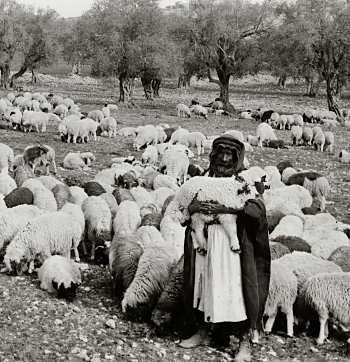 “Woe to the shepherds who are destroying and scattering the sheep of My pasture!” declares the LORD. 2 Therefore thus says the LORD God of Israel concerning the shepherds who are tending My people: “You have scattered My flock and driven them away, and have not attended to them; behold, I am about to attend to you for the evil of your deeds,” declares the LORD. 3 “Then I Myself will gather the remnant of My flock out of all the countries where I have driven them and bring them back to their pasture, and they will be fruitful and multiply. 4 I will also raise up shepherds over them and they will tend them; and they will not be afraid any longer, nor be terrified, nor will any be missing,” declares the LORD.


